

We Read the Textile Waste Reduction Act So You Didn’t Have To

If reading 20 pages of proposed federal legislation about textile waste sounds like your idea of a good time, we should probably be friends. If not, we read it for you.
The Textile Waste Reduction Act caught our attention because it asks questions we encounter through Rotate here in Las Vegas: What happens to clothing after its original use? Who can use it next? And what happens when the options available don’t match the materials we have?
We first came across the proposal through Teen Vogue, then went to the legislation to understand what it would do. Below is what stood out, what it could mean for textile reuse and recycling, and why we’re following it from a city with no shortage of event shirts.
Key takeaways
The Textile Waste Reduction Act is proposed federal legislation. Introduced on September 16, 2026, H.R. 10454 would direct the Environmental Protection Agency to establish a National Textile Circularity Strategy.
The proposal examines what happens beyond collection. It calls for assessing existing services, infrastructure costs, workforce needs and viable markets for pre-owned textiles and recycled materials.
Textile circularity includes repair, reuse and recycling. Keeping clothing useful for longer requires different options for different materials.
The funding provision would make existing opportunities easier to find. It would require the EPA to publish information about available federal assistance, rather than create a dedicated fund for every textile project.
Nevada could contribute to the national conversation. The proposal includes public comment and stakeholder input, although it does not guarantee Nevada a designated advisory board seat.
This post discusses the proposed legislation, not requirements already in effect.
What is the Textile Waste Reduction Act?
Rep. Chellie Pingree of Maine introduced the Textile Waste Reduction Act on September 16, 2026. The proposal would direct the EPA to establish and implement a National Textile Circularity Strategy, bringing a more coordinated federal approach to reducing textile waste and keeping materials in use. It would also establish a federal working group and an advisory board to support that work.
A major part of the proposal is understanding the system we have now. Its needs assessment would examine where discarded textiles go, which repair, reuse, recovery and recycling services exist, who does that work, and what prevents those services from growing. It would also look at the markets for recovered materials and the resources needed to support a national strategy.
That’s a useful starting point because a nationwide textile recycling program would require considerably more than an announcement and some collection bins. Before we can build a stronger system, we need to understand what we have, what’s missing and what it would take to fill the gaps.
Collecting clothes is only part of the equation
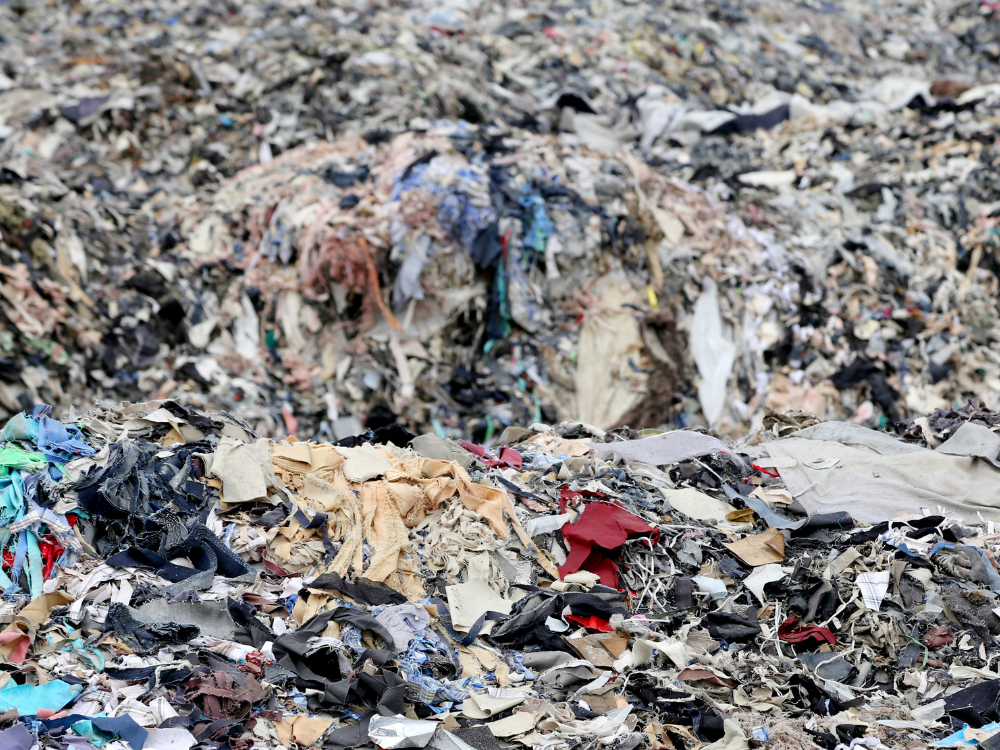
This is the part of the bill that caught our attention most. Conversations about clothing waste often begin with collection: donate your clothes, find a recycling bin or keep textiles out of the trash. Those can be useful steps, but collecting something doesn’t automatically give it a viable next destination. The clothes may have left your storage room, but someone still needs a plan for them.
The proposal calls for examining the potential to create or expand viable markets for pre-owned textiles and materials produced through textile recycling. It also looks at infrastructure costs, workforce needs, funding and other barriers. In everyday terms, that means asking who can use these materials, what it takes to get them there and whether the work can be sustained.
The same challenge came up in a recent New York Times story about California’s Responsible Textile Recovery Act. California is building a system that holds the apparel and textile industry responsible for collection, repair, reuse and recycling. The article highlighted how much infrastructure still needs to be developed to handle that work at scale. Rachel Kibbe of American Circular Textiles summed up the challenge: “Until there is a market for those materials, it’s just collecting and sorting products with nowhere to go.”
That’s the part we keep coming back to. If we want more clothes to stay in rotation, we need realistic next uses for them and the resources to make those next uses possible. Collection gets the process started; what follows determines where the clothing ends up.
Repair, reuse and recycling all have a role
Another useful detail is how the bill defines textile circularity: minimizing textile waste, using resources efficiently and keeping textiles in circulation for as long as possible. It includes repair, reuse and recycling, allowing for different approaches to different materials.
A perfectly wearable shirt may be ready for another person. A garment with a damaged seam may need a repair. Branded apparel that cannot be redistributed as-is might be suitable for upcycling, depending on the fabric and the company’s restrictions. Other materials may be appropriate for textile recycling if a processor can accept them.
A shirt doesn’t become unusable because the event printed on it ended. At the same time, being made of fabric doesn’t guarantee that a recycling facility can take it. Responsible next-use planning means looking at the clothing itself, understanding the available options and matching the two.
Where does Las Vegas fit into this?
Las Vegas has a very recognizable wardrobe: hospitality uniforms, convention shirts, promotional apparel and clothing made for events with a much shorter lifespan than the fabric. Then the event ends, the uniforms change or someone discovers that the extra shirt order was, perhaps, a little optimistic. The original purpose is over, but the clothing is still here.
That’s the problem Rotate helps conventions, exhibitors, event organizers, associations and businesses work through. We evaluate what they have, including the material, quantity, branding and condition, and explore responsible next uses. Depending on the project, that may involve reuse, community redistribution, upcycling or finding an appropriate textile recycling option. What’s possible depends on the materials, timing, capacity, branding restrictions and available outlets.
Doing this work also makes the limitations easier to see. A company can want to recycle its uniforms, but an appropriate processor still needs to accept them. A convention can have hundreds of leftover shirts, but someone needs to sort them and identify a recipient with a use for them. A material can be technically recyclable without an accessible outlet capable of processing it.
The proposed national assessment would examine many of those same practical questions. For Las Vegas, that could help bring more attention to the services and infrastructure needed after the exhibitors pack up and the attendees head home.
What does the bill say about funding?
The bill would require the EPA to identify existing federal financial assistance and incentives that could support textile circularity. That includes grants, loans, subsidies and other opportunities available to states, local governments, Tribal governments and nongovernmental organizations. The agency would publish that information and update it at least twice each year.
This provision would not create a dedicated pot of money for Las Vegas or guarantee funding for every textile recycling idea. It could make relevant opportunities easier for eligible organizations to find, which is useful when the work involves equipment, transportation, space and paid labor. A plan for keeping clothing in circulation also needs a plan for covering the cost.

How could Nevada have a voice?
Although the bill was introduced by a representative from Maine, its proposed strategy would be national. The needs assessment would examine textile repair, reuse, recovery, recycling and hauling, including at the local level. That creates room to consider how needs and available services differ from one community to another.
If enacted, the bill would require at least 60 days of public comment while the EPA develops the strategy. The agency would also solicit input from stakeholders including industry, researchers, nongovernmental organizations, and state, local and Tribal governments. The proposed advisory board includes roles for organizations involved in textile recycling, recovery, repair and reuse, along with government representatives. Nevada would not be guaranteed its own seat, but there would be opportunities for people here to contribute.
From our perspective, Las Vegas has useful experience to bring to that conversation. Event deadlines, branding restrictions and large quantities of clothing with a short original purpose all affect what happens next. The people working through those details can help explain where a national strategy would need to meet local reality.
What we’re taking away from all of this
What stood out most was how much of the proposal focuses on understanding the system itself. Where are textiles going? Who is already keeping them in use? What gets in the way? Are there people or businesses ready to use the materials being collected? Those are also the questions we work through at Rotate, one project at a time.
There is no giant recycling bin that magically turns every unwanted garment into something new. Some clothing can be worn again, some needs repair, and some can be repurposed into a useful new item. Other materials need recycling options that may be limited or unavailable. Making progress means building the services, relationships and demand that give those materials a realistic next use.
For businesses, that work can begin before a bill becomes law. Bringing clothing into the planning conversation early gives everyone more time to evaluate options, clarify restrictions and budget for the work. If you already have boxes waiting for an answer, start with what you know: what’s inside, roughly how much you have and any limits on how it can be used.
We’ll be watching what happens next with the Textile Waste Reduction Act. In the meantime, we’ll keep helping businesses here in Las Vegas answer the question sitting in their storage room: what can this clothing do next?