

More Than Fabric: Personal Style, Sustainable Fashion, and Intentional Shopping
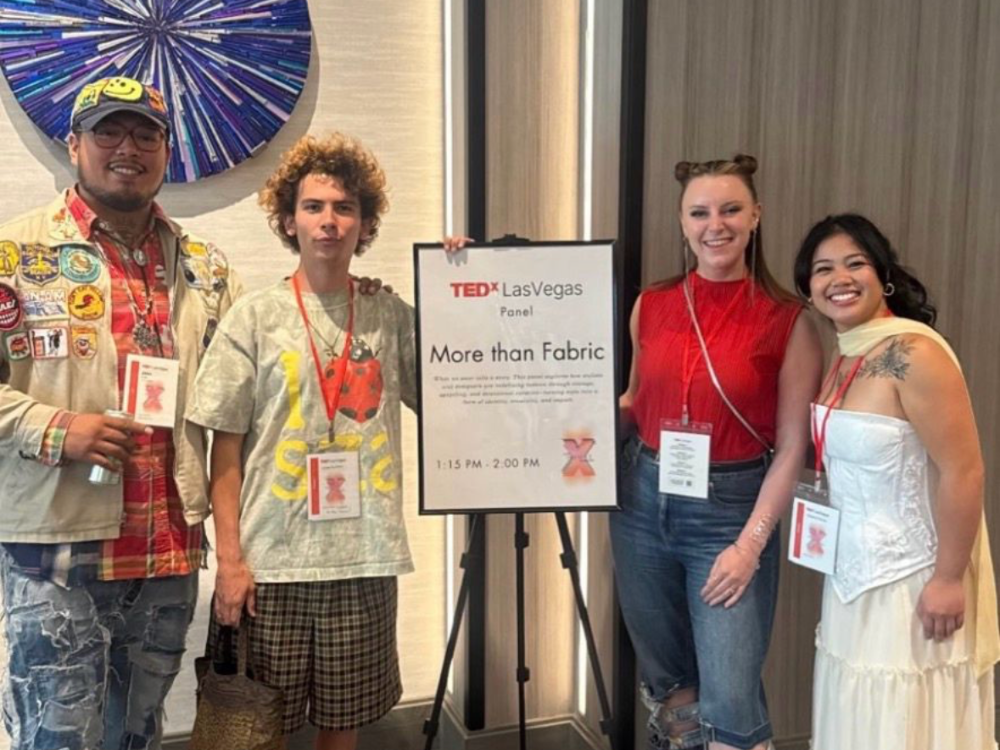
Earlier this month, I got to sit on a TEDx Las Vegas panel called More Than Fabric alongside designers, models, and vintage curators to talk about fashion, sustainability, and personal style.
Which, as you can imagine, is very much my kind of group chat.
Through Rotate, I spend a lot of time thinking about what happens to our clothes after we’re done with them, but I’m equally fascinated by everything that happens before that point. Why we wanted something in the first place, why we suddenly stop wearing it, why certain clothes feel so much like us, and why others end up sitting in the back of the closet with the tags still attached.
During the panel, I realized that a lot of us had started asking these questions around the same time.
For me, one of those moments came when I saw photos of discarded clothing piling up in Chile’s Atacama Desert. Until then, I don’t think I had fully processed the fact that our clothes don’t disappear just because we’re done with them.
Once you see that, it’s pretty hard to unsee.
It also made me realize that sustainable fashion is about a lot more than convincing people to buy the “right” clothes.
Clothing is wrapped up in identity, aspiration, belonging, creativity, insecurity, self-expression and consumption, sometimes all within the same outfit. Asking people to change how they shop means untangling behaviors we’ve been building for decades.
That’s a much more interesting conversation to me.
Maybe we don’t need another trend
One of the questions I was asked during the panel was what I hope people understand about me or my work before I even start talking.
I want them to see the human behind it.
Rotate isn't supposed to feel perfect. I actually want you to see that something has been touched, altered, repaired and reimagined by human hands because it has.
Somewhere along the way, though, fashion became very good at convincing us that perfection and newness are the goal.
Now we can build an entire wardrobe around a microtrend, buy an outfit specifically for one vacation, or decide we need to dress like an entirely different person because an aesthetic showed up on our feed enough times.
And I’m tired too.
The more I work in this space, the less convinced I am that everyone has a shopping problem. I think a lot of us have a personal style problem, or more accurately, we've become disconnected from what our personal style actually is.
Those are two very different things.
Go to a thrift store and buy nothing
I know this sounds slightly counterproductive coming from someone who sells secondhand clothing, but one of my favorite things to tell people is to walk into a thrift store with absolutely no intention of buying anything.
Just look around.
Traditional retail is very good at telling you what you're supposed to want right now. The colors are coordinated, the mannequins are styled, the trends have been selected and everything has been merchandised to help you picture yourself in this season's version of yourself.
A thrift store is chaos by comparison, and I mean that lovingly.
You can have a dress from the '80s next to a jacket from three years ago next to somebody's grandmother's blouse next to a pair of jeans you definitely owned in high school.
Nobody has curated those pieces around one aesthetic for you.
So you have to decide what catches your eye.
Without realizing it, you start learning something about yourself. Maybe you always reach for ridiculous sleeves. Maybe it's menswear. Maybe you love color even though your Pinterest board has been trying to convince you that you're a beige person.
Secondhand gives you space to figure out what you like when nobody is handing you the answer.
I think that's a huge part of why it can feel so personal.
We made clothes disposable
One part of the panel conversation kept coming back to how normal it has become to buy clothes for incredibly specific moments.
The birthday dinner dress. The concert outfit. The conference look. The vacation outfit destined for exactly one photo carousel.
Buying something for an occasion isn't inherently bad, but the ease with which clothing can become disposable is worth paying attention to.
An enormous amount has already happened before a garment reaches your closet. Someone made it. Materials were produced. It was dyed, finished, packaged and transported.
Then sometimes we wear it once.
The same thing happens when clothing gets damaged. A stain, tear or weird hem can make us feel like a garment has reached the end of its life when, in reality, it might just be ready for its next version.
That stain can become a dye project. A dress can become a top. A hole can become an excuse to finally learn visible mending. Something that doesn't fit quite right might be one alteration away from becoming the thing you wear constantly.
This is a huge part of why I love upcycling.
It shifts the question from Is this ruined to What else could this be.
Your wardrobe doesn't need to be beige
I have to get something off my chest about the idea of a sustainable wardrobe.
I don't think the future of fashion is everyone owning the same five neutral basics.
If a tiny capsule wardrobe makes you happy, fantastic. I will support you and your beautifully coordinated oatmeal-colored sweaters from afar.
But sustainability doesn't require us all to become minimalists.
I'm much more interested in the idea of a curated wardrobe.
A curated wardrobe can be maximalist, colorful, dramatic, vintage-heavy, sentimental, experimental, understated or completely impossible to describe on Pinterest.
The point isn't how much personality your closet has. It's whether the personality in there is actually yours.
When you know what you like, you can get much better at recognizing what belongs in your wardrobe and what you're only tempted by because it's having a moment.
That doesn't mean your style can't change either. Of course it will. We're humans. We're allowed to evolve.
I'd just rather our closets evolve with us instead of being replaced every time we do.
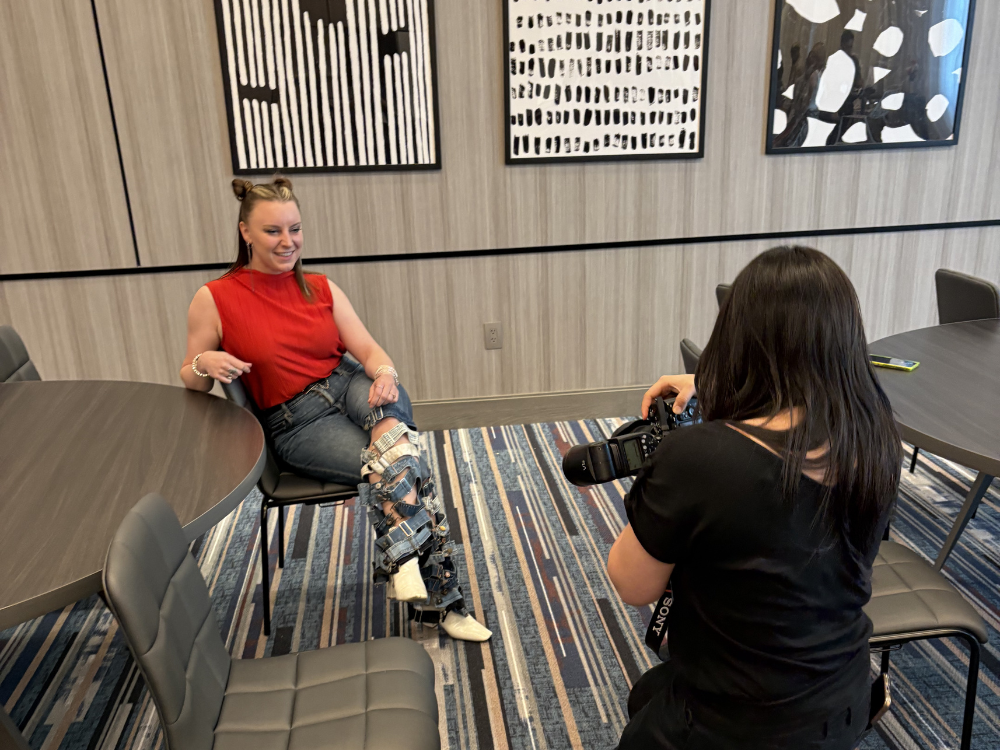
Fashion might be getting social again
One of my favorite things happening right now has very little to do with trends.
People are doing things together again.
Run clubs, book clubs, craft nights, sewing groups, mending events and DIY workshops are everywhere, and I don't think that's a coincidence.
We're craving connection.
Fashion has a really interesting place in that shift because clothing doesn't have to be something we only consume. It can be something we participate in.
You can swap it. Mend it. Dye it. Alter it. Learn how to sew it. Give it to a friend. Turn it into something completely different while sitting at a table with people who are doing the same thing.
That's the part of sustainable fashion I'm especially excited about in Las Vegas.
I want more clothing swaps, upcycling workshops, secondhand events and spaces where people can make things together. Rotate gets to be part of creating some of those spaces, which is one of my favorite parts of what I do.
Because sometimes the most sustainable thing about an old shirt isn't just that we kept it out of the landfill.
It's what happened around the table while we figured out what to do with it.
The rule that changed how I shop
At the end of the panel, we talked about what we actually hope people do differently after conversations like this.
For me, it comes back to intentionality.
One little rule has made a surprisingly big difference in how I shop.
I try to imagine myself wearing something 30 times before I buy it.
Thirty isn't a magic sustainability number, and I'm not standing in my closet keeping score on a clipboard. It just forces me to stay with a purchase long enough to decide whether I actually want the thing or whether I want the idea of the thing.
Can I picture it with clothes I already own. Can I imagine reaching for it after the initial excitement wears off. Does it fit my actual life rather than the imaginary life I occasionally shop for.
Sometimes the answer is yes, and I buy the thing.
Other times I realize I have apparently been shopping for a woman who attends significantly more European dinner parties than I do.
Either way, slowing down gives me a chance to choose.
That's ultimately what I want sustainable fashion to give us more of.
Not rules. Not guilt. Not a perfectly optimized closet filled with approved sustainable things.
A better relationship with our clothes, a stronger sense of our own style, more creativity with what we already have, and enough space between wanting something and buying it to figure out whether we actually want it.
Our clothes are more than fabric.
I think they get a lot more interesting when we start treating them that way.